Why are quality Early Childhood Education Programmes important?
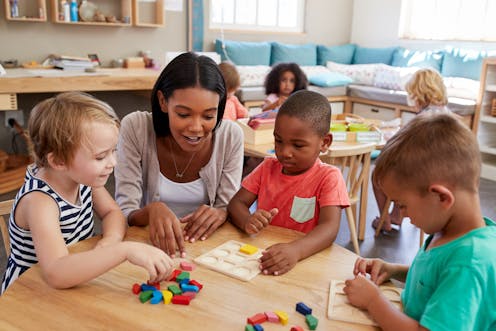
It is well known that early childhood is a crucial period of a child’s life in terms of brain development. This means that increased exposure to risk factors, such as living in poverty, can have negative effects upon brain cognition and development that can severely impact a child for their whole life (1). When thinking about this, it is important to know that studies have shown early childhood education programs to improve the cognitive performance of children living in poverty (2). However, more than 200 million children living in lower- and middle-income countries are thought to not attain their development potential (1). This suggests that there is a strong need for quality early childhood education programs within lower- and middle-income countries, to ensure that risk factors are minimised, and children can reach their full potential. Not only this, but some early childhood education programs have been shown to lower the chances of a child growing up to be unemployed, which reduces the chances of that child living in poverty in the future – breaking the cycle of poverty (2).

What makes a good quality Early Childhood Education Programme?
In short, a good quality early childhood education program in a lower- or middle-income country would have the following basics:
- A qualified, and motivated work force
- A suitable infrastructure for children
- Suitable teaching and learning resources
- An age and culturally appropriate curriculum
Arguably one of the most important of these factors is a skilled work force. Many studies have shown that early childhood education programs have a huge impact upon children when they are delivered by staff that have suitable knowledge and training (3). However, only 50% of pre-primary teachers in lower income countries are trained, which suggests that this is an area needing big improvements in order to ensure quality early childhood education programs worldwide (4).
Effective Parent Training Education Programmes
Effective Parent Training programs are very important, as parents are typically the main caregiver of the child for the first few years of life, but in lower- and middle-income countries parents may not have the skills or resources required to deliver adequate care. As a result of this, there is growing evidence that support from parent training programs helps to improve parent’s responsive caregiving, which therefore leads to an increase in the child’s development (5).

One example of an effective parent training program is the Reach Up Program. It was originally implemented in Jamaica but has also been shown to be transferable when adaptations are used. The goal of Reach Up is to help aid child development via building the mother/primary caregiver’s skills and responsive caregiving. Paraprofessionals attend workshops wherein they are trained, amongst other things, how to engage in play with the mother and child. These play sessions help to improve mother-child interactions, whilst helping to improve the child’s cognitive development. Play materials are left for the family, so that there is more exposure for the child. When Reach Up was implemented in Brazil and Zimbabwe, there was an 80% rate of positive comments from mothers, suggesting it was both helpful and well accepted (5).
Effective Centre Based Education Programmes
A school or centre based setting is an ideal setting for education interventions for young children, due to the large amount of time spent there for most children. It is also an easier way of reaching a higher number of children at once, as less professionals are needed to reach a bigger number of children. This means that less staff need to be trained, which can be particularly important in a lower- or middle-income country.

The Incredible Years program in Jamaica is a great example of an effective school-based program. It is an intervention which provided teachers already in the education system with training in classroom behaviour management, along with other important skills. It was found to have significant benefits to both the children’s behaviour within the classroom, and also the teacher’s behaviour towards the children. These benefits were still found to be sustained during a 6 month follow up, suggesting that the program was very effective. The program was also implemented using existing services and professionals, meaning it is more suitable for lower- and middle-income countries (6).
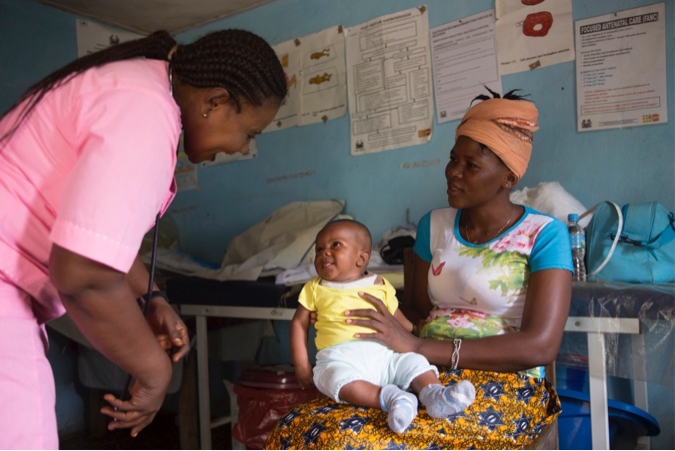
An example of an effective centre-based program is the What You Do with Baby Really Matters program that was delivered in health care centres in Jamaica. This kind of program is especially relevant for lower- and middle-income countries, as it successfully integrates an intervention into pre-existing services that most children and families already access. This allows for these kinds of programs to target the most disadvantaged, albeit at less intensity. The program consisted of nine 3-minute videos being shown to caregivers within a healthcare centre. The videos were relevant, relatable, easy to understand, motivating and credible to the parents. This was followed by the health care provider discussing the videos with the caregiver/s and encouraging them to attempt the behaviours seen in them at home with their children. Again, this type of program is much easier to produce on a wider scale, meaning that more children are likely to be helped, even if they are helped to a lesser extent than with a more intense, or one-on-one program (7).
What are the challenges to implementing high quality programs, especially at a wide scale?
Unfortunately, there are many challenges when you begin to look at how to implement these types of high-quality programs at a wider scale. The main challenge for lower- and middle-income countries is lack of money, and therefore inadequate funding and limited resources (8). Some other challenges include decentralized governance (9), and lack of coordination across sectors (10). However, whilst there are many challenges to widespread implementation, reducing intensity of programs and integrating them with pre-existing services is a great way to produce these programs at a wider scale more easily. It may be better to positively impact more children on a smaller level, than it might be to positively impact less children more intensely.
References
(1) Chang, S. M., Grantham-McGregor, S. M., Powell, C. A., Vera-Hernández, M., Lopez-Boo, F., Baker-Henningham, H., & Walker, S. P. (2015). Integrating a parenting intervention with routine primary health care: a cluster randomized trial. Pediatrics, 136(2), 272-280.
(2) Barnett, W. S. (1998). Long-term cognitive and academic effects of early childhood education on children in poverty. Preventive Medicine, 27(2), 204-207.
(3) Sylva, K., Melhuish, E., Sammons, P., Siraj-Blatchford, I., & Taggart, B. (2004). The effective provision of pre-school education (EPPE) project: Findings from pre-school to end of key stage 1.
(4) Early childhood education. (n.d.). Retrieved from https://www.unicef.org/education/early-childhood-education
(5) Smith, J. A., Baker-Henningham, H., Brentani, A., Mugweni, R., & Walker, S. P. (2018). Implementation of Reach Up early childhood parenting program: acceptability, appropriateness, and feasibility in Brazil and Zimbabwe. Ann NY Acad Sci, 1419(1), 120-140.
(6) Baker-Henningham, H., & Walker, S. (2018). Effect of transporting an evidence-based, violence prevention intervention to Jamaican preschools on teacher and class-wide child behaviour: a cluster randomised trial. Global Mental Health, 5.
(7) Walker, S. P., Powell, C., Chang, S. M., Baker-Henningham, H., Grantham-McGregor, S., & López-Boo, F. (2016). Parenting Programme in Health Centres: What You Do with Baby Really Matters. Implementation Manual.
(8) Bidwell, K., & Watine, L. (2014). Exploring early education programs in peri-urban settings in Africa. Accra, Ghana: UBS Optimus Foundation.
(9) Britto, P. R., Lye, S. J., Proulx, K., Yousafzai, A. K., Matthews, S. G., Vaivada, T., … & MacMillan, H. (2016). Advancing Early Childhood Development: from Science to Scale 2 Nurturing care: promoting early childhood development. safety (eg, routines and protection from harm), 3, 4.
(10) Samman, E. E., N. Presler-Marshall, T. Jones, C. Bhatkal, M. Melamed, M. Stavropoulou, and J. Wallace. 2016. Women’s Work: Mothers, Children and the Global Childcare Crisis. London: Overseas Development Institute.
 Yasmin's Blog
You have such a very interesting blog. I agree that the features of a high-quality educational program in underdeveloped nations are:
– Manpower with good qualifications and enough motivation.
– An infrastructure that suits children
– Adequate resources to teach and to learn
– A syllabus that matches the age and culture of the child
Perhaps one key player is the well-versed manpower. Research has proven that well-versed staff reach optimum results when they teach little children educational programs (1).
Offering suitable salaries and improving work conditions are very important. A study conducted in Portugal discussed the effect of improving work conditions, like offering sufficient salaries, on the quality of children’s education (2). The research made it clear that decision takers must undergo self-assessment for the processes done at their centers, including the syllabuses and the teachers, which in turn will enhance the quality (2).
.Similarly, I discussed the findings of a valuable study in Bangladesh. Aboud (2006) conducted a study in Bangladesh which inspected the effectiveness of ECCE’s programs when offered to little children before the age of school. The study investigated how the social and mental capabilities were affected by the programs (3). The ½ day program was offered 6 days per week (3). It offered reading and writing activities, math, and story-telling. The children were also allowed to play freely. The outcomes of the research were astounding (3). Following the program, it was concluded that it was beneficial on several levels including: mental reasoning, sociability, math, verbal reasoning, and reading and writing skills (3). Also, the research encouraged decision takers to consider the program composition so as to be able to offer top-quality ECCE (3).
1. Sylva, K., Melhuish, E., Sammons, P., Siraj-Blatchford, I., & Taggart, B. (2004). The effective provision of pre-school education (EPPE) project: Findings from pre-school to end of key stage 1.
2. Bidwell, K., & Watine, L. (2014). Exploring early education programs in peri-urban settings in Africa. Accra, Ghana: UBS Optimus Foundation.
3. Aboud, F. E. (2006). Evaluation of an early childhood preschool program in rural Bangladesh. Early Childhood Research Quarterly, 21(1), 46-60.
LikeLike
I want to add that it would be highly beneficial if decision takers try to increase ECCE’s quality. For instance, they should make enhancements to the national syllabus in addition to managing the national strategy, the environment, and the standards of quality (1). The collaboration and understanding between different stages in education must be well-established which in turn leads to an easier transition of the children between junior and middle school stages (2).
ECCE’s quality can be greatly increased in case proper training was given to the staff. Proper training is beneficial in comprehending the advancements in education in addition to helping the staff enhance their skills, experience, and knowledge (3). Proof from Malawi and Ghana Chile proved the utmost importance of training (3).
I agree with you that the widespread implementation of high quality programs is hindered by several obstacles. The primary obstacle for an underdeveloped country is a financial one which in turn leads to insufficient resources and capital limitations (4). Among other obstacles are: insufficient cooperation between sectors (5) and the decentralization of governance (6).
Although implementing the programs on a large scale is hindered by several obstacles, I agree with you that an easier way to implement these services is to limit the new program and integrate it with the established programs. It would be more beneficial for large numbers of children to benefit from the new programs on a small scale more than it would be beneficial for smaller groups of children to benefit from them on a larger scale.
1. Janta, B., Van Belle, J., & Stewart, K. (2016). Quality and impact of centre-based early childhood education and care. Rand Corporation.
2. PPMI (2014). Study on the effective use of early childhood education and care in preventing early school leaving. Luxembourg: Publications Office of the European Union.
3. OECD (Organisation for Economic Cooperation and Development). (2006). Starting strong II: Early childhood education and care.
4. Bidwell, K., & Watine, L. (2014). Exploring early education programs in peri-urban settings in Africa. Accra, Ghana: UBS Optimus Foundation.
5. Britto, P. R., Lye, S. J., Proulx, K., Yousafzai, A. K., Matthews, S. G., Vaivada, T., … & MacMillan, H. (2016). Advancing Early Childhood Development: from Science to Scale 2 Nurturing care: promoting early childhood development. safety (eg, routines and protection from harm), 3, 4.
6. Samman, E. E., N. Presler-Marshall, T. Jones, C. Bhatkal, M. Melamed, M. Stavropoulou, and J. Wallace. (2016). Women’s Work: Mothers, Children and the Global Childcare Crisis. London: Overseas Development Institute.
LikeLike
You have such a very interesting blog. I was interested in the “centre-based program” that you mentioned. I also read that the videos were credible, motivating, easy to understand, relatable, and relevant. Motivation and parent’s engagement is very important. I mentioned in my blog that high-quality ECCE should target parents’ involvement in the ECCE program (1). It is also necessary to organize meetings from time to time between the parents and teachers. Another recommendation is to empower parents (2). This can include giving toys to parents in order to be used with their children, giving valuable information, and motivating them (2). In addition, I think that the contents of the curriculum are very important (4). Evidence showed that a high-quality ECCE should include a curriculum that balanced between the academic and comprehensive aspects (4). For example, it is necessary to target child’s knowledge and skills in the academic approach, whereas it targets the wider development and wellbeing in the comprehensive approach (4).
In Bangladesh, Aboud did a relevant study (3). They examined the influence of a preschool program with a mix of math, teacher-directed play, and instructions, and stories on their performance in a wide range of domains such as nonverbal reasoning, verbal reasoning, vocabulary, and school readiness(3). They found that these skills improved significantly (3). Moreover, he found that their social skills improved (3). They recommended that policymakers should take the structure of the curriculum into consideration in order to give a high-quality ECCE (3).
1. Taggart, B., Sylva, K., Melhuish, E., Sammons, P., & Siraj, I. (2015). Effective pre-school, primary and secondary education project (EPPSE 3-16+): How pre-school influences children and young people’s attainment and developmental outcomes over time.
2. Ngwaru, J. M. (2012). Parental involvement in early childhood care and education: promoting children’s sustainable access to early schooling through social-emotional and literacy development. Southern African Review of Education with Education with Production, 18(2), 25-40.
3. Aboud, F. E. (2006). Evaluation of an early childhood preschool program in rural Bangladesh. Early Childhood Research Quarterly, 21(1), 46-60.
4. OECD (Organisation for Economic Cooperation and Development). (2006). Starting strong II: Early childhood education and care.
LikeLike
I enjoyed reading your blog, in addition to containing a lot of interest, and I liked your narration of the things that make the early childhood education program high-quality, and I like to add a point that I read in another blog and I liked it and consider it from my point of view that it is very important in this field which is the development of learning through Free play and stories that, in the opinion that makes children enjoy during the educational process, it is also important to highlight the well-being and development on a large scale in education
Focused learning in the case of playing in children enhances their love for learning and science, introduces children to the world of inquiry, academic tasks and knowledge, and forming vital links between the child and the content; the teacher must pay attention to the current concepts and interests of children by promoting play activities and free stories and knowledge of children with content Wide.
This type of learning is an essential component of any society characterized by justice and democracy, as it promotes the emergence of a class of interested and active citizens. Through cooperation, children make sense to society. They also develop a sense of independence when exploring their surroundings, critical thinking and asking questions.
Thank you for this great and useful blog, and please accept my comment.
LikeLike